Toddler needs crowns under anesthesia?
Early decay can often be stopped and re-hardened at home — before surgery day.

From Dr. Whilby, dentist & dad · 2-minute read
I'm Dr. Whilby, a dentist. You walked out with a $4,000 quote, a surgery date weeks away, and a knot in your stomach. Here's what nobody told you in that five-minute appointment: in the earliest stage, decay in a baby tooth can often be stopped and re-hardened at home. But that window closes — and most parents don't find out until it already has.
Early decay does not stay early.
A toddler's enamel is roughly half the thickness of an adult's. What looks like a harmless chalky spot today is a moving process — and it moves fast. This is the sequence I watch play out in my chair, month after month.
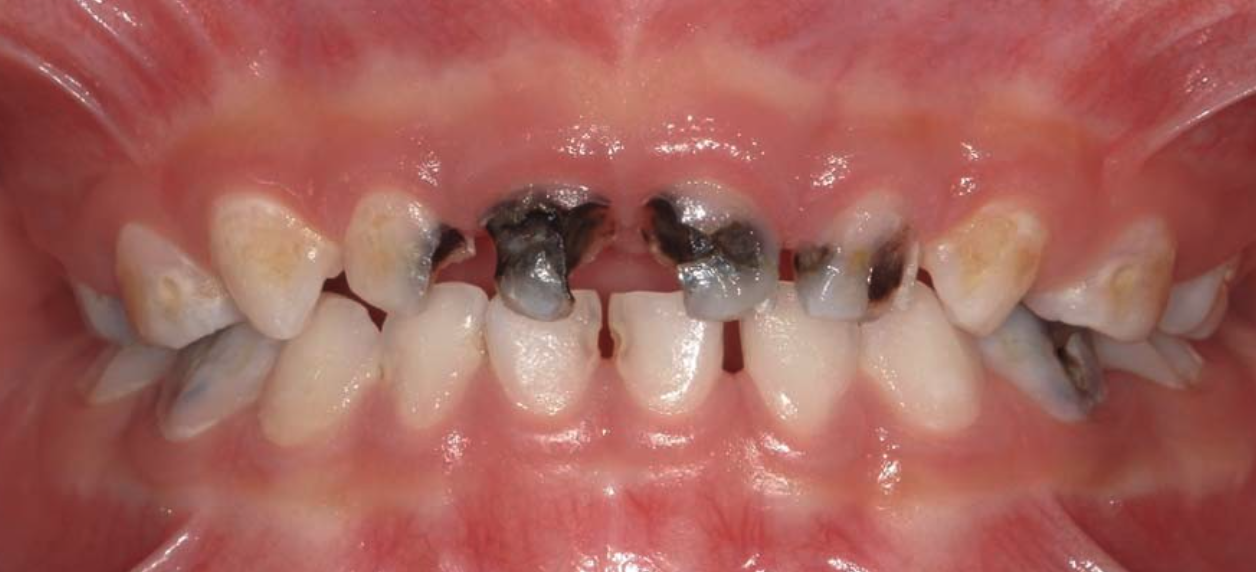
The decay reaches the nerve
Early decay is soft and shallow. Left alone, it tunnels through thin baby-tooth enamel toward the nerve — often in months, not years. Once it's there, the tooth can no longer be re-hardened.
A quiet cavity becomes an abscess
Toddlers rarely complain until the infection is already at the root. Parents describe the same night: a swollen cheek, a fever, and an emergency room visit at 2 a.m.
The treatment gets bigger, not smaller
A spot that could have been watched and re-mineralized turns into pulpotomies, stainless-steel crowns, or extractions — usually all in one sedation appointment.
Baby teeth get pulled early
Baby molars hold the space for adult teeth. Lose them early and the adult teeth can drift, crowd, and erupt out of line — which often means braces later.
Your child goes under general anesthesia
For a 2- to 4-year-old, full sedation is not a small decision. It carries real risk, requires monitoring, and it's the part most parents tell me they lie awake about.
You pay thousands — and it can happen again
Crowns under anesthesia are commonly quoted at $3,000–$5,000. And if nothing changes at home, new decay can appear on the next teeth within a year.
Every week you wait, the cheapest, gentlest option quietly disappears.
Nothing about waiting is neutral. Doing nothing is a decision — and it is almost always the most expensive one.
Stop the decay. Or buy time until your child is old enough to sit in a chair.
The No-Drill Protocol is the same sequence I walk parents through before anyone books sedation. It has two honest goals: re-harden what can still be saved, and arrest what can't — so treatment can wait until your child can handle it awake.
- 1
Find out if the spot can still be reversed
A 2-minute check at your bathroom mirror tells you whether the decay is still soft (reversible) or already cavitated. This one answer decides everything that follows — and most parents are shocked which one they have.
- 2
Re-harden the enamel with the right mineral paste
Most toddler toothpaste does nothing for this. I name the exact three products, the correct amount by age, and how to apply it on a child who clamps their mouth shut.
- 3
Close the overnight acid window
A 90-second nightly routine plus two small feeding swaps. This is the part that decides whether the spot hardens or keeps spreading over the next 8–12 weeks.
- 4
Buy time until your child is old enough to cooperate
If a tooth does eventually need treatment, arresting the decay and delaying it 12–24 months can mean a simple filling in a chair — awake, numb, and calm — instead of an operating room.
Everything you need for $49
One payment. Instant access. Watch the whole thing tonight and start the routine before bed.
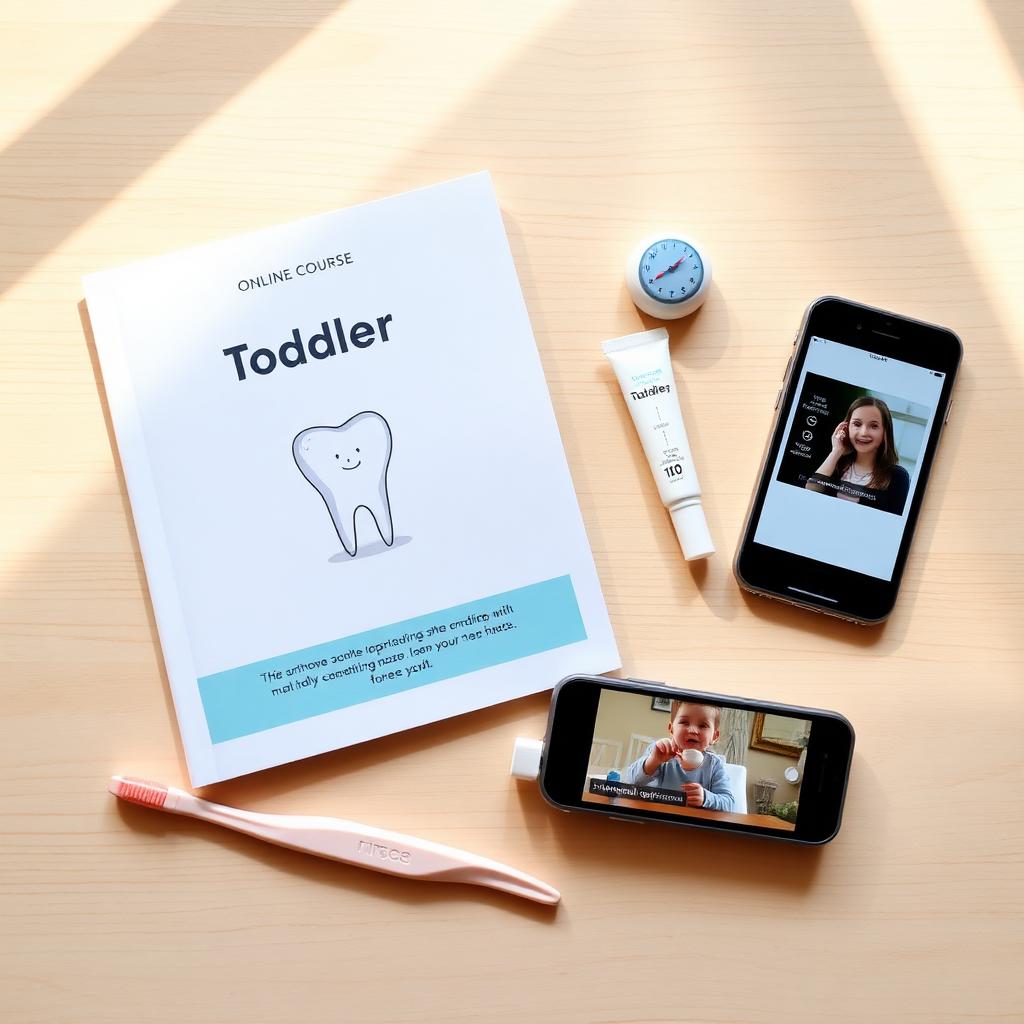
4 video modules with Dr. Whilby
Short, watch-tonight walkthroughs of the entire protocol — no fluff, no theory.
The Medical-Grade Paste Shopping Guide
Exact brands, strengths by age, where to buy, and how to apply.
The SDF "Dentist Script"
Word-for-word language to ask your dentist for silver diamine fluoride and a remineralization window instead of drilling.
The Cavity-Stopping Diet Tweak
The snack-timing and bedtime changes that starve decay — without banning sugar.
The 30-Day Tracker
A printable sheet so you can show your dentist exactly what changed, week by week.
The Candidate Assessment Guide
How to tell whether your child's specific spot is still in the reversible window.
Lifetime access + all future updates
Buy once. Keep it for every child, every checkup.
Complete access
$49

Watch it all. If it doesn't give you a clearer plan than the one you left the dentist with, email me within 30 days for a full refund.
They had a surgery date too.

"I was told my 2-year-old needed 4 crowns under anesthesia. Instead, I used Dr. Whilby's protocol. Three months later, her dentist was amazed — the decay had stopped and hardened. No drill. No tears."
"Avoided 4 crowns under anesthesia. The decay actually hardened."

Sarah M.
Portland, OR
"My son's dentist couldn't believe the difference in 8 weeks."

James T.
Austin, TX
"No more tears at the dentist. This changed everything for us."

Aaliyah W.
Atlanta, GA
"I was terrified of the drill. Wish I'd found this a year ago."
Elena R.
Phoenix, AZ
"Simple, clear, and it works. Two spots reversed already."

Kenji L.
Seattle, WA
"Finally a plan I can actually do at home. Peace of mind."

Rebecca H.
Denver, CO
"Avoided 4 crowns under anesthesia. The decay actually hardened."
Sarah M.
Portland, OR
"My son's dentist couldn't believe the difference in 8 weeks."
James T.
Austin, TX
"No more tears at the dentist. This changed everything for us."
Aaliyah W.
Atlanta, GA
"I was terrified of the drill. Wish I'd found this a year ago."
Elena R.
Phoenix, AZ
"Simple, clear, and it works. Two spots reversed already."
Kenji L.
Seattle, WA
"Finally a plan I can actually do at home. Peace of mind."
Rebecca H.
Denver, CO
"Dr. Whilby's calm approach and clear protocol saved my daughter from anesthesia. She's now cavity-free and actually looks forward to brushing."
Rachel P.
Mom of 2, San Diego
"I've been a pediatric nurse for 15 years. This is the first at-home protocol I actually recommend to parents. It's grounded in real dentistry."
Danielle K., RN
Pediatric Nurse
"We were quoted $4,200 for crowns under general anesthesia. Followed the protocol for 10 weeks — dentist said no treatment needed."
Michael B.
Dad of twins, Chicago
"What I love is that Dr. Whilby actually explains the WHY. My toddler's white spots have already reversed and it's only been a month."
Sofia L.
Mom, Miami
"As a dentist myself, I've quietly recommended this to friends. The remineralization approach is exactly what the research supports."
Dr. Amanda T.
DDS, Verified
"Dr. Whilby's calm approach and clear protocol saved my daughter from anesthesia. She's now cavity-free and actually looks forward to brushing."
Rachel P.
Mom of 2, San Diego
"I've been a pediatric nurse for 15 years. This is the first at-home protocol I actually recommend to parents. It's grounded in real dentistry."
Danielle K., RN
Pediatric Nurse
"We were quoted $4,200 for crowns under general anesthesia. Followed the protocol for 10 weeks — dentist said no treatment needed."
Michael B.
Dad of twins, Chicago
"What I love is that Dr. Whilby actually explains the WHY. My toddler's white spots have already reversed and it's only been a month."
Sofia L.
Mom, Miami
"As a dentist myself, I've quietly recommended this to friends. The remineralization approach is exactly what the research supports."
Dr. Amanda T.
DDS, Verified
One-time payment · Lifetime access · 30-day money-back guarantee
One-time payment · Lifetime access